
7 Instagram growth habits that actually work in 2026
Cut through the noise. These seven habits, backed by creator data, will grow your Instagram audience this year.
I run a 14k Instagram account in the aesthetic-feed niche, and I’ve spent the last three years testing nearly every "growth hack" that crosses my feed. Most don’t work. The handful that do are unglamorous, slow, and ignored by most "10x your Instagram in 30 days" articles.
This is the no-fluff version: seven habits that genuinely moved the needle for me and the creators I work with in 2026. Each one ties back to data you already have access to via the free Unfollowers Tracker, because most growth advice is empty without the feedback loop.
1. Audit your following list quarterly
The single most undervalued growth habit is a quarterly follower audit. Open the Instagram unfollowers tracker, drop in your latest ZIP (use the tutorial if you haven’t before), and look at four numbers: total followers, new unfollowers, ghost requests cleared, and mutuals percentage.
Why it matters: the unfollowers list is a leading indicator. When churn spikes after a content shift, that’s real feedback. When churn is stable, you’re on the right track. It’s not about ego; it’s about closing the loop.
2. Reward your real fans before chasing new ones
The one-way fans page shows accounts that follow you while you don’t follow them back. These are some of your most loyal viewers, they chose you without expecting a reciprocal follow. Ignoring them in favour of cold-DMing strangers is one of the most common rookie growth mistakes.
A simple ritual: every month, scroll your fans list and pick five accounts to engage with intentionally, a real comment, a save, a DM about something they posted. Reciprocity is real, and the new comments often turn into ongoing conversations.
3. Clean up ghost follow requests
Pending follow requests waste mental space and inflate your "following" count without ever turning into real connections. The ghost tracker shows them sorted oldest-first so you can either send a friendly nudge or unsend the request and move on.
Realistic cadence: clear ghost requests every 2-3 months. Don’t bulk-unsend more than ~50 per day or you risk Instagram’s rate limits. The what is a ghost follower post covers this in more depth.
4. Post consistently, but not robotically
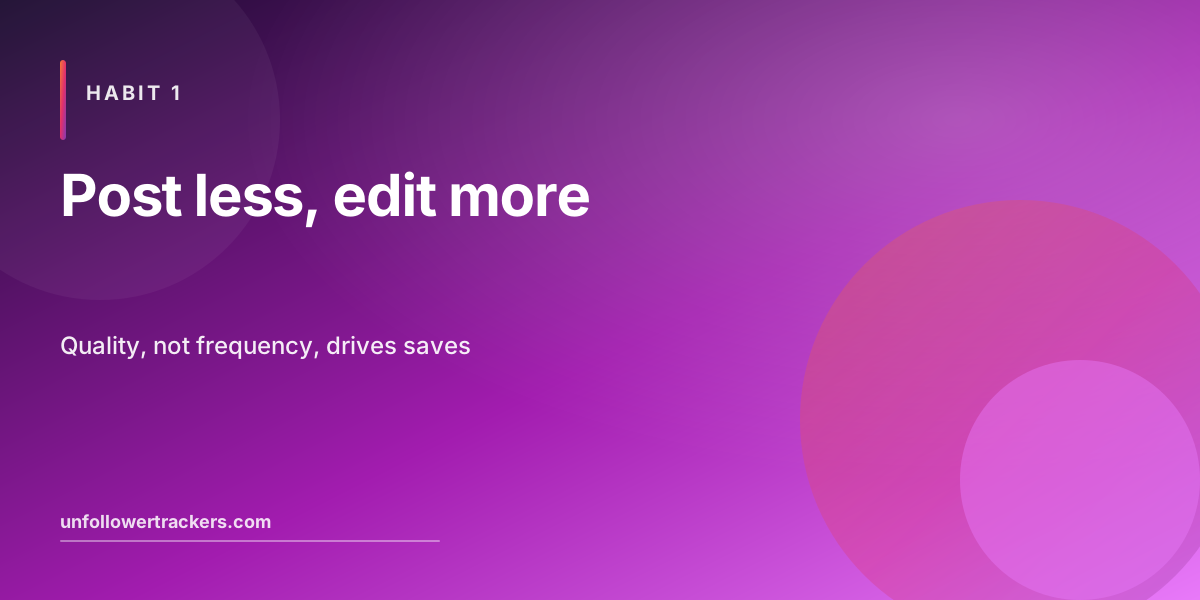
Instagram’s algorithm rewards consistency, not raw frequency. Three carefully made posts per week beats nine rushed ones. The risk of forced frequency is that the quality drop trains your audience to scroll past your content even when you do publish your best work.
A pattern that works: pick a publishing rhythm (e.g., Tuesday Reel, Thursday carousel, Sunday story series) and protect it like an editorial calendar. Show up reliably for 12 weeks before you change anything. The data takes that long to settle.
5. Reply to every DM in the first 60 minutes
DM response time is one of the strongest engagement signals Instagram has. Fast replies tell the algorithm that you’re an active human, not a broadcast bot. They also dramatically increase the chance the DMer will engage with your next post.
The 60-minute window matters because that’s roughly when the algorithm "decides" how aggressively to push your most recent post. A flurry of DM responses during that window tends to correlate with stronger reach on the post itself.
6. Repurpose Reels for TikTok, YouTube Shorts, and Threads
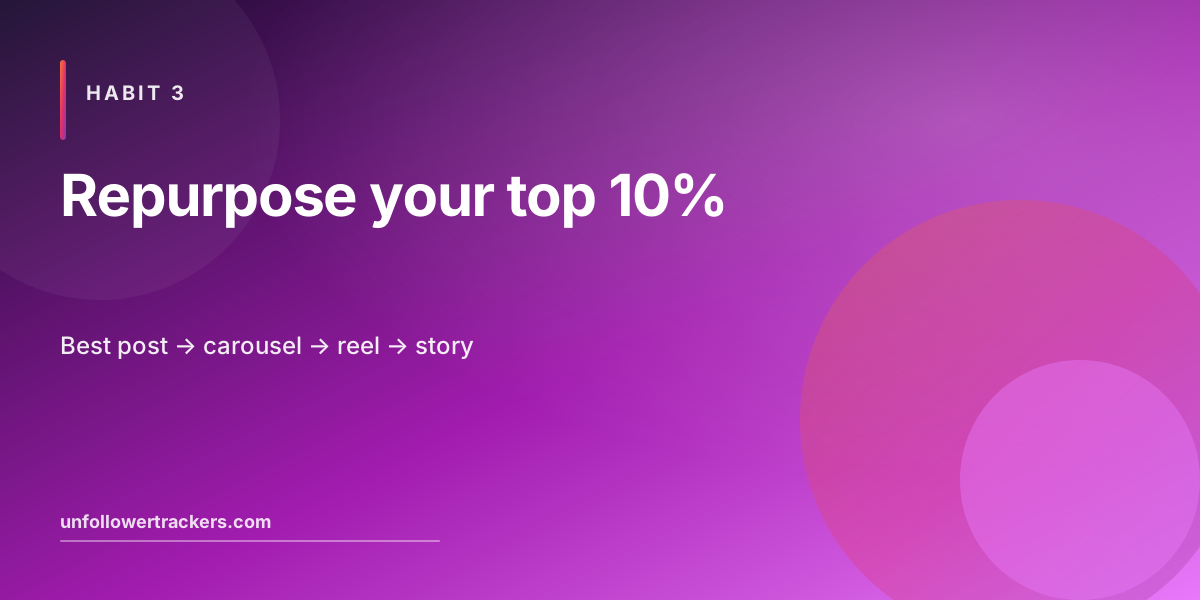
A single 30-second clip can power four platforms. The cost of producing it is fixed; the audience is multiplied. The trick is to shoot vertical, leave headroom for captions, and avoid platform-specific watermarks (TikTok strips watermarked content).
Each platform has its own follower dynamics. We cover the unfollowers and audience tracking angle for the cousin platforms in X (Twitter) unfollowers tracker, TikTok followers tracker, and Threads unfollowers tracker.
7. Track mutuals, not just followers
Followers are vanity. Mutuals are your actual Instagram graph, people who follow you while you also follow them. They are the source of most of your repeated engagement, and they’re the audience whose opinion you should let shape your content.
Open the mutuals tracker once a month. Look for: which mutuals consistently engage, which fell silent, and which new mutuals joined. The list is a faster heartbeat of your community than the raw follower count will ever be.
A meta-habit: feedback loops over hot takes
The thread that connects all seven habits is the same: you cannot grow what you don’t measure, and you cannot measure if you’re afraid to look. The export-based Unfollowers Tracker makes it easy to look, because you don’t have to log in to a sketchy app to see your own numbers. Make the look part of the rhythm and the growth will follow.
What to skip
A few "growth tips" you can safely ignore in 2026:
- Engagement pods. They inflate vanity metrics and risk shadow bans.
- Bot follow/unfollow loops. Same problem, larger scale.
- Buying followers. The accounts churn within weeks and skew every analytic you’d use to make decisions.
- Generic caption templates. Audiences notice the formulaic structure and scroll past.
- Posting your link in every comment. It works briefly, then trains the algorithm to demote your account.
Tools you actually need
You can run the entire system with one free tool, the Unfollowers Tracker, and Instagram itself. No paid analytics, no premium scheduler. The tracker covers unfollowers, ghosts, fans, and mutuals in a single ZIP upload.
If you’re curious how the underlying data works, the Instagram ZIP file method post explains the JSON structure and the math.
Wrapping up
The honest version of "Instagram growth in 2026" is that the platform rewards consistency, response speed, and respect for your existing audience. Tools should serve those habits, not replace them. The Unfollowers Tracker gives you the data you need to run the loop without ever logging into a third-party app, which means you can spend your energy on the content, not the security clean-up after a sketchy tool ban.
FAQ, Instagram growth habits
How often should I post to grow on Instagram in 2026?
Most growing accounts post 3-5 times per week in the feed plus 3-4 Stories per week. Quality and consistency matter more than frequency above 2 posts per week.
Do hashtags still work on Instagram?
Less than they used to. Use 3-5 relevant hashtags per post instead of stuffing 30. The Name and bio fields, plus alt text on images, are now bigger discovery signals than hashtags.
Should I focus on Reels or carousels in 2026?
Both. Reels for reach (especially to non-followers); carousels for saves (the strongest retention signal). The healthiest posting mix is roughly 60% Reels + 30% carousels + 10% single posts/photos.
Are engagement pods worth it?
No. They inflate vanity metrics and risk shadow bans. Real engagement from your real audience is what compounds; engineered engagement does not.
What is the single best Instagram growth habit?
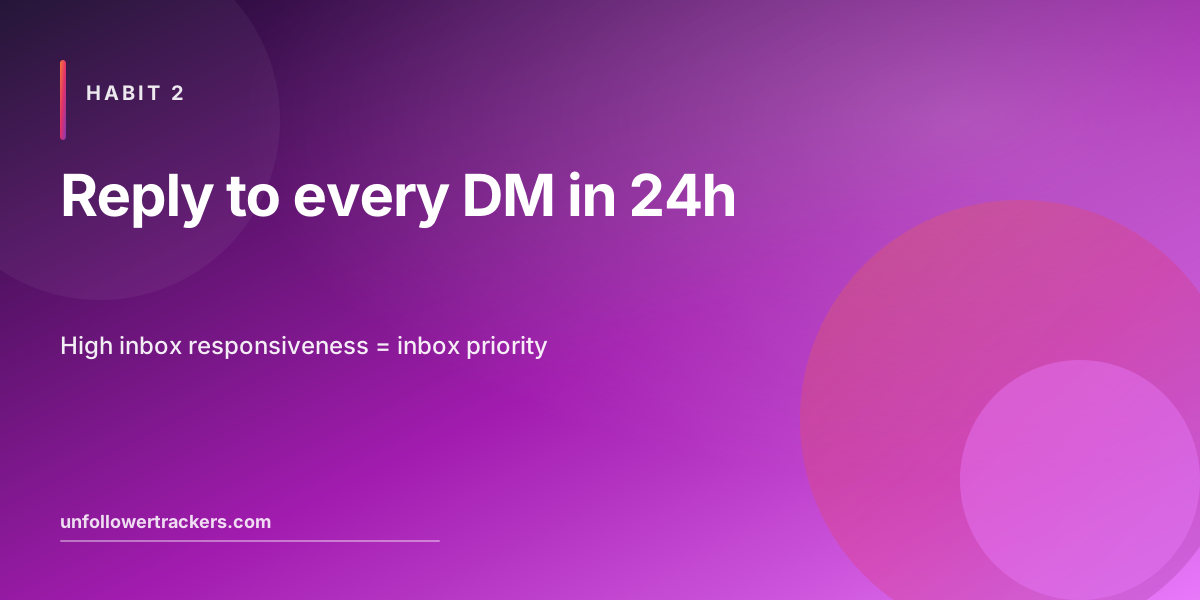
Reply to every DM and meaningful comment within 24 hours. Inbox responsiveness is one of the strongest signals to the algorithm AND it builds the audience trust that turns followers into superfans.
How do I track whether my growth habits are working?
Pair Instagram Insights (reach, saves, profile visits) with the free Unfollowers Tracker (who is leaving and at what rate). Together they tell you whether your habits are growing or churning your audience.
Table of contents11
Related reads
All posts
How to find out who unfollowed you on Instagram (without logging in)
A complete 2026 guide to discovering who unfollowed you on Instagram, safely, using the official Instagram data export and zero third-party logins.
Why you should never use a third-party Instagram login app
Third-party “unfollowers” apps that ask for your Instagram password put your account at serious risk. Here’s exactly what goes wrong and the safer way to do it.
What is a “ghost follower” on Instagram and should you care?
Ghost followers don’t engage, don’t comment, and don’t boost your reach, but should you actually clean them out? A practical, no-panic guide.